
Silent Stroke Symptoms Most People Ignore: Early Warning Signs You Should Never Dismiss
When most people think about a stroke, they imagine sudden paralysis, difficulty speaking, or a medical emergency that requires immediate hospitalization. However, not every stroke presents with dramatic symptoms. Some strokes occur quietly, causing damage to the brain without obvious warning signs. These are commonly known as silent strokes.
Because the symptoms are often mild or temporary, many people ignore them or mistake them for stress, fatigue, or normal aging. Unfortunately, untreated silent strokes can increase the risk of future strokes, memory problems, cognitive decline, and long-term neurological complications.
Recognizing the warning signs early and seeking timely evaluation from the best neurosurgeon in Pune can help protect your brain health and prevent serious complications.
What Is a Silent Stroke?
A silent stroke occurs when blood supply to a part of the brain is temporarily interrupted, causing damage to brain tissue. Unlike a major stroke, a silent stroke may not cause noticeable paralysis or severe symptoms.
Many individuals do not realize they have experienced a silent stroke until it is detected through brain imaging performed for another reason.
Although the symptoms may appear minor, the effects on the brain can be significant over time.
Why Are Silent Strokes Often Overlooked?
One of the biggest challenges with silent strokes is that the symptoms can be subtle and short-lived. People often assume they are experiencing stress, exhaustion, lack of sleep, or age-related changes.
Because the symptoms may disappear quickly, medical attention is often delayed. This can increase the risk of additional strokes and long-term brain damage.
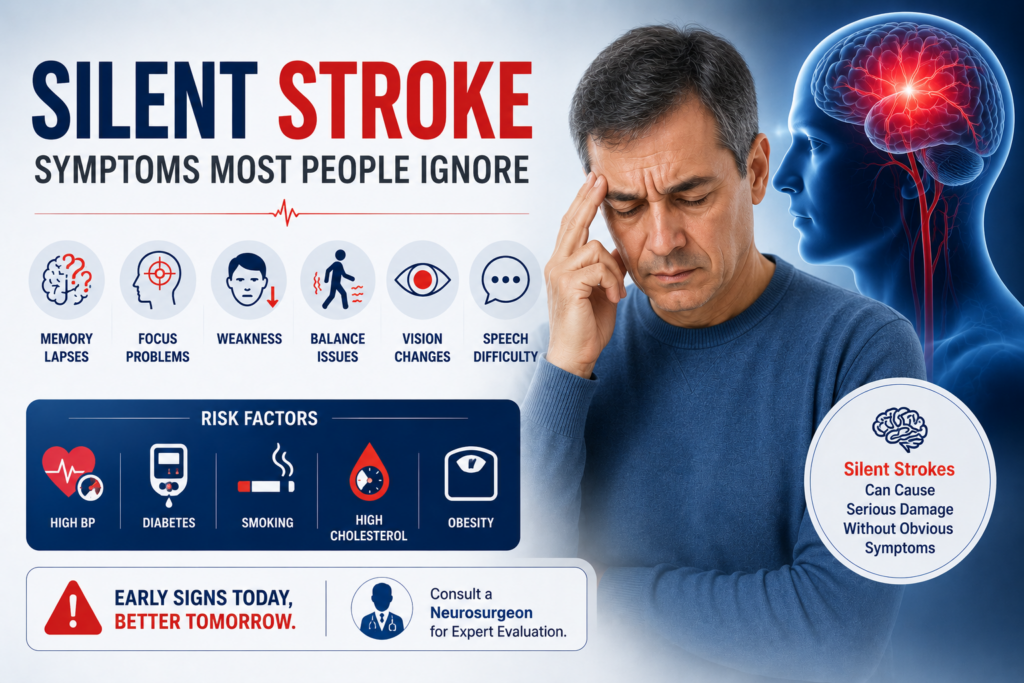
Silent Stroke Symptoms Most People Ignore
Sudden Memory Problems
Occasional forgetfulness is common, but sudden changes in memory should not be ignored.
Warning signs may include:
- Forgetting recent conversations
- Frequently misplacing items
- Difficulty recalling familiar information
- Increased confusion during daily activities
These symptoms can sometimes indicate reduced blood flow to areas of the brain responsible for memory and cognition.
Difficulty Concentrating
Many people experiencing a silent stroke report problems with focus and concentration.
You may notice:
- Trouble completing routine tasks
- Reduced attention span
- Difficulty making decisions
- Feeling mentally slow or confused
Persistent cognitive changes should always be evaluated by a healthcare professional.
Brief Episodes of Weakness
Temporary weakness in the face, arm, or leg can be an important warning sign.
- Sudden arm weakness
- Difficulty gripping objects
- Facial drooping
- Leg weakness while walking
Even if these symptoms improve quickly, they should never be ignored.
Changes in Balance and Coordination
The brain controls balance and movement. A silent stroke can affect these functions without causing obvious disability.
Watch for:
- Frequent stumbling
- Unsteady walking
- Loss of balance
- Difficulty with coordination
These symptoms are often mistaken for fatigue or aging.
Sudden Vision Changes
Changes in vision can occur when blood flow to certain parts of the brain is affected.
Possible symptoms include:
- Blurred vision
- Double vision
- Temporary vision loss
- Difficulty focusing
Any unexplained visual disturbance should be medically evaluated.
Mild Speech Difficulties
Speech changes are not always dramatic during a silent stroke.
Common signs include:
- Difficulty finding the right words
- Slower speech
- Trouble understanding conversations
- Mild confusion while speaking
These symptoms may come and go but can indicate an underlying neurological problem.
Who Is Most at Risk of a Silent Stroke?
Several factors can increase the risk of silent strokes.
High Blood Pressure
Uncontrolled blood pressure is one of the leading causes of stroke-related brain damage.
Diabetes
Diabetes can damage blood vessels and increase the likelihood of reduced blood flow to the brain.
Smoking
Smoking significantly increases the risk of stroke by affecting blood vessel health.
High Cholesterol
Excess cholesterol can contribute to blocked arteries and poor circulation.
Obesity and Sedentary Lifestyle
Lack of physical activity and excess weight are important risk factors for stroke and cardiovascular disease.
Individuals with these risk factors should consider regular neurological evaluations with a good neurosurgeon in pune, especially if they experience unusual symptoms.
What Happens If a Silent Stroke Is Left Untreated?
Ignoring a silent stroke can lead to serious long-term complications.
Potential consequences include:
- Increased risk of major stroke
- Memory loss
- Cognitive decline
- Difficulty concentrating
- Balance problems
- Reduced quality of life
- Higher risk of vascular dementia
Early diagnosis can help reduce these risks and improve long-term outcomes.
How Are Silent Strokes Diagnosed?
Because symptoms can be subtle, proper evaluation is essential.
A doctor may recommend:
- MRI of the brain
- CT scan
- Neurological examination
- Blood pressure assessment
- Blood tests
- Heart and vascular evaluation
Advanced diagnostic facilities available at a best neurosurgery hospital in pune can help identify silent strokes and determine the underlying cause.
A top neurosurgeon in pune can also assess neurological symptoms and recommend the most appropriate treatment plan.
Can Silent Strokes Be Prevented?
In many cases, yes.
Simple lifestyle changes can significantly lower stroke risk:
- Control blood pressure
- Manage diabetes effectively
- Maintain healthy cholesterol levels
- Exercise regularly
- Follow a balanced diet
- Avoid smoking
- Limit alcohol consumption
- Attend routine health check-ups
Prevention remains one of the most effective ways to protect long-term brain health.
Frequently Asked Questions
Can a silent stroke happen without obvious symptoms?
Yes. Many silent strokes cause mild or temporary symptoms that people often overlook.
Is a silent stroke dangerous?
Yes. Even without severe symptoms, silent strokes can damage brain tissue and increase the risk of future neurological problems.
Can silent strokes lead to memory loss?
Repeated silent strokes may contribute to memory difficulties, cognitive decline, and dementia over time.
When should I consult a specialist?
If you experience sudden weakness, confusion, speech problems, balance issues, or unexplained cognitive changes, it is important to consult a good neurosurgeon in pune for evaluation.
When Should You Seek Immediate Medical Attention?
Seek urgent medical care if you experience:
- Sudden weakness on one side of the body
- Difficulty speaking
- Sudden vision loss
- Severe dizziness
- Loss of balance
- Unexplained confusion
Prompt treatment can help prevent permanent brain damage and improve recovery outcomes.
Final Thoughts
Silent strokes are often overlooked because the symptoms can be mild, temporary, or easily mistaken for everyday health concerns. However, even small areas of brain damage can affect memory, concentration, balance, and overall neurological function.
Recognizing the warning signs early can make a significant difference in preventing future complications. If you notice persistent neurological symptoms, consulting the best neurosurgeon in Pune is an important step toward early diagnosis and effective treatment.
For comprehensive stroke evaluation, advanced neurological care, and specialized treatment options, choosing the best neurosurgery hospital in pune and seeking guidance from a top neurosurgeon in pune can help ensure the best possible outcomes for your brain health.