

Why Are Young Adults Experiencing More Spine Problems Than Ever?
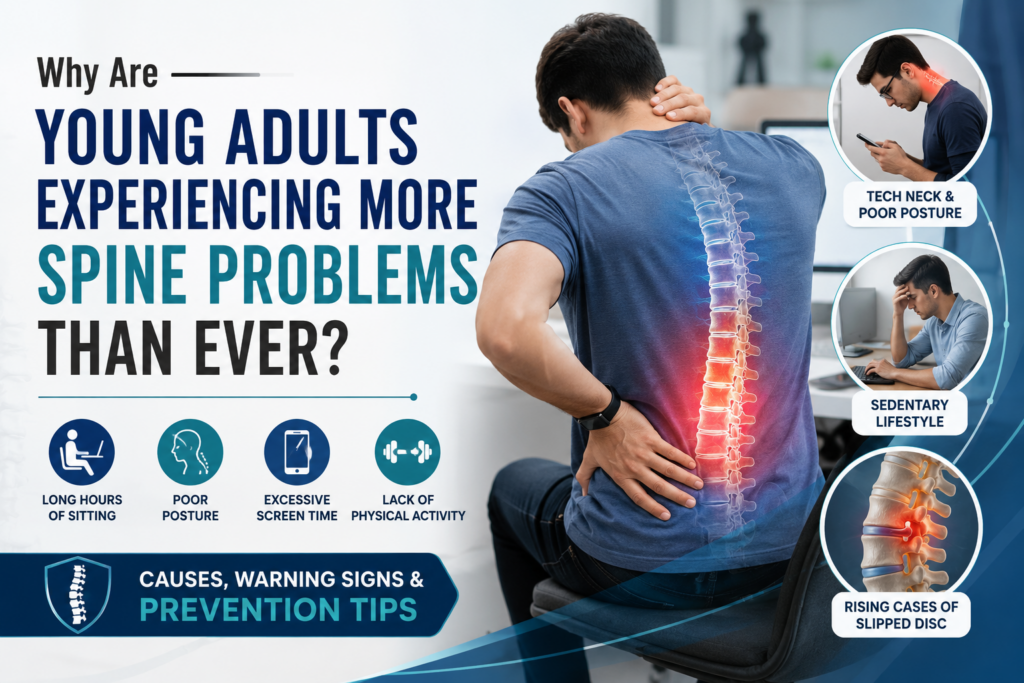
Why Are Spine Problems Increasing Among Young Adults?
Long Hours of Sitting
- Increase pressure on spinal discs
- Weaken supporting muscles
- Reduce flexibility
- Contribute to poor posture
Poor Posture Is Becoming a Major Concern
- Looking down at mobile phones for long periods
- Slouching while working
- Improper workstation setup
- Lack of ergonomic support
Lack of Physical Activity Weakens the Spine
- Weak core muscles
- Reduced flexibility
- Poor spinal support
- Increased risk of injury
Increased Use of Smartphones and Digital Devices
Many people spend several hours each day:
- Texting
- Browsing social
- media
- Watching videos
- Gaming
Constant forward bending of the neck increases pressure on the cervical spine and may contribute to:
- Neck stiffness
- Shoulder pain
- Headaches
- Nerve irritation
Over time, these issues can become chronic if not addressed early.
Rising Cases of Slip Disc in Young Adults
- Use of fancy bikes
- Leaning forward while riding a bike
- Poor lifting techniques
- Sedentary lifestyles
- Repetitive strain
- Obesity
- Sports injuries
- Back pain
- Leg pain
- Tingling sensations
- Numbness
- Muscle weakness
Obesity and Weight Gain Affect Spine Health
As obesity rates continue to rise, healthcare professionals are seeing more spine-related complaints among younger populations.
- Increased pressure on spinal discs
- Joint strain
- Poor posture
- Reduced mobility
Work-From-Home Culture and Spine Problems
- Sofas
- Beds
- Dining tables
- Back pain
- Neck pain
- Muscle stiffness
- Postural problems
Warning Signs Young Adults Should Not Ignore
Seek medical evaluation if you experience:
- Persistent back pain
- Neck pain lasting several weeks
- Pain radiating into the arms or legs
- Tingling or numbness
- Muscle weakness
- Difficulty walking
- Reduced mobility
Can Spine Problems Be Prevented?
Simple lifestyle changes can help reduce the risk of spine disorders.
Maintain Good Posture
Keep your spine aligned while sitting, standing, and using digital devices.
Stay Physically Active
Regular exercise strengthens muscles that support the spine.
Take Frequent Breaks
Avoid sitting continuously for long periods.
Strengthen Core Muscles
Core exercises help improve spinal stability and reduce strain.
Use Proper Lifting Techniques
Always bend your knees and avoid lifting heavy objects with your back.
Maintain a Healthy Weight
Reducing excess weight can decrease pressure on the spine and joints.
When Should You Consult a Specialist?
Not every spine problem requires surgery. Many conditions can be managed successfully through conservative treatment, physiotherapy, posture correction, and lifestyle modifications.
However, symptoms that persist or worsen should be evaluated by a best spine specialist in pune to identify the underlying cause and recommend appropriate treatment.
Advanced diagnostic facilities available at a trusted spine clinic in pune can help detect spine conditions early and support effective treatment planning.
Frequently Asked Questions
Why are young adults getting back pain more often?
Long hours of sitting, poor posture, lack of exercise, obesity, and excessive screen time are some of the leading causes.
Can poor posture permanently damage the spine?
Poor posture over time can contribute to chronic pain, disc problems, and muscle imbalances if not corrected.
Is a slipped disc common in young adults?
Yes. Modern lifestyle habits have increased the number of young adults experiencing slipped discs and related spine conditions.
When should I visit a specialist for spine pain?
If pain persists for several weeks, affects daily activities, or is associated with numbness or weakness, medical evaluation is recommended.
Final Thoughts
If you are experiencing persistent back pain, neck pain, or symptoms affecting your daily routine, consulting an experienced spine surgeon in pune can help you understand the cause and explore the most appropriate treatment options. Early evaluation at a reputable spine clinic in pune can play an important role in preventing long-term complications and maintaining a healthy spine.