
Keyhole Surgery
Keyhole Surgery - By Dr. Pravin Ganjre
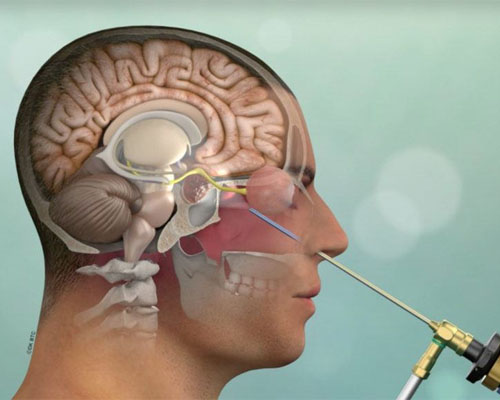
Retro-sigmoid craniotomy (usually called “keyhole” craniotomy) is a minimally-invasive operational method done to remove brain tumors. This method allows for the removal of head base tumors through a small hole behind the ear, giving access to the cerebellum and brainstem. A neurosurgeon may use this method to reach specific tumors, such as meningiomas and acoustic neuromas (vestibular schwannomas).
Types of brain tumors treated with “keyhole” craniotomy:
Retro-sigmoid craniotomy results in:
- Shorter pain than an open craniotomy.
- Shorter pain than an open craniotomy.
- Least scarring.
Benefits of “keyhole” craniotomy:
The retro-sigmoid craniotomy is one of several treatment choices for brain tumors. It may be done for the following kinds of brain tumors:
- Acoustic neuromas
- Meningiomas
- Metastatic brain or spine tumors
- Skull base tumors
What is Keyhole spine surgery?
Keyhole surgery allows spine surgeon optimal outcomes with minimal tissue damage which leads patients faster recovery and return to normal activities. The term Keyhole Disc Replacement Surgery replaces the central portion of the disc (Nucleus Pulposus) rather than the whole disc including the Disc Wall (Annulus). This surgery is performed when disc is unable to replicate the complex movement patterns of a disc. Discs do not simply bend in one direction. The presence of the posterior facet joints dictates a complex ellipsoidal pattern of movements upon the disc. The orientation of these joints varies significantly from person to person. The Total Disc Replacement fails to replicate these movements.
Procedure
Keyhole Spinal Surgery is the colloquial Endoscopic Minimally Invasive Spine Surgery (EMISS) and Fluoroscopically controlled surgery. Regrettably many practitioners claim to be performing MISS when performing conventional procedures through a reduced incision which in reality should be termed Less Invasive Spinal Surgery (LISS). Such procedures include Microdiscectomy performed with a microscope through a 50 mm (2 inch) incision. Endoscopic Minimally Invasive Spine Surgery is performed through an incision of 7.5mm or less. The surgery varies from patient to patient. Patients may be tall/short, fat or thin. Patients may be asymmetrical, scoliotic and may have varieties of postures. All of these features make for a variation in the natural disc. Then the size (footprint), shape and height of all the discs (par example L3/4, L4/5, and L5/S1 discs) are all different. Manmade Replacements simply do not replicate the disc accurately.
Why Choose us?
Dr. Pravin Ganjre is a leading Keyhole Spine Surgeon in Pune. He has several years of experience in performing keywhole spinal surgery and has helped many patients. He has wide experience working in various fields of Neurosurgery like Brain Trauma, Spine Trauma, Paediatric Neurosurgery, Brain and Spine Tumours and Surgeries for Back Pain etc.
He puts patient first and also spends time to understand each patient’s condition, history and provides most suitable advice ranging from rest, rehabilitation, strength and functional exercises and in some cases, surgery. He also informs other possible ways of treatment and risks involved.
Retro-sigmoid craniotomy is a minimally invasive brain surgery where a small opening is made behind the ear to access structures near the brainstem and cerebellum. It is commonly called “keyhole” craniotomy because it uses a smaller incision while allowing precise access to deep brain areas. This technique is often used for tumors, nerve compression, or vascular conditions and is planned carefully by the best neurosurgeon in Pune using detailed imaging.
This procedure is recommended for conditions such as acoustic neuroma, trigeminal neuralgia, facial nerve disorders, and certain brain tumors located near the posterior part of the brain. It is chosen when targeted access is required with minimal disturbance to surrounding brain tissue. Dr. Pravin Ganjre evaluates symptoms, scans, and neurological function before recommending this approach.
The keyhole retro-sigmoid approach offers benefits such as smaller incision, reduced tissue damage, less postoperative pain, and faster recovery compared to traditional open surgery. It also helps preserve important nerves related to hearing and facial movement. Support from specialists, including a Spine Surgeon in Pune when nerve pathways are involved, helps ensure safe and balanced neurological care.
Retro-sigmoid craniotomy should be performed by an experienced neurosurgeon trained in microsurgical and minimally invasive techniques. Choosing the best neurosurgeon in Pune ensures accurate surgical planning and nerve preservation. Dr. Pravin Ganjre is known for his expertise in complex cranial procedures, with a focus on patient safety, precision surgery, and long-term neurological outcomes.