

- Better cosmetic results from fewer skin cuts
- Less blood loss from operation
- Decreased chance of muscle loss since less or no cutting of the muscle is required.
- Reduced chance of infection and postoperative pain.
- Quicker healing from surgery and shorter rehabilitation required.
- Reduced dependence on pain medications after surgery.
Also, some MIS surgeries are done as outpatient procedures and utilize only local anesthesia — so there is less risk for an adverse reaction to general anesthesia.
MIS Surgery
MIS Surgery - By Dr. Pravin Ganjre
In common, the purpose of minimally invasive spine surgery (MIS) surgery is to maintain the vertebral bones and spinal segments and/or relieve the pressure being applied to the spinal tissues — usually a result of conditions such as spinal weakness, bone spurs, herniated discs, scoliosis or spinal tumors.
As denied to open spine surgery, minimally invasive surgical procedures can be quicker, more secured and need less healing time. Because of the decreased trauma to the soft tissues and muscles.
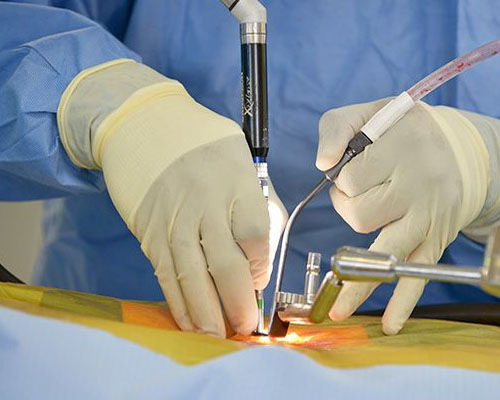
The possible advantages are:
As with any surgical method, no matter how minimal, there are certain dangers connected that include but are not limited to:
- Potential adverse reaction to the anesthetic
- Unexpected blood loss during the method
Localized infections, no matter how little the hole section. And, though rare, there is always a little chance that the first MIS surgery cannot be completed, requiring either a 2nd procedure or full open surgery.
Which spinal conditions can be treated with minimally invasive spine surgery (MISS)?
Surgery of the spine can often be performed through either an open surgical approach or a minimally invasive approach. Not all types of spine surgery can be done with MISS.
The following type of conditions can be treated with MISS.
- Herniated disc
- Spinal stenosis (narrowing of the spinal canal)
- Spinal deformities (like scoliosis)
- Spinal instability
- Spondylolysis (a defect in a part of lower vertebrae)
- Fractured vertebra
- Removal of a tumor in the spine
- Infection in the spine
Minimally invasive spine surgery is an advanced surgical technique used to treat spine conditions through very small incisions. Instead of cutting large muscles, special instruments and microscopes are used to reach the spine with minimal tissue damage. MIS is commonly performed for conditions like slipped disc, spinal stenosis, and nerve compression. Careful planning by the best neurosurgeon in Pune helps ensure accurate and safe treatment.
MIS is recommended when spine-related pain, numbness, or weakness does not improve withMinimally invasive spine surgery offers several benefits, including smaller cuts, less blood loss, reduced muscle damage, and quicker recovery. Patients usually experience less pain after surgery and can return to daily activities sooner compared to traditional spine surgery. Dr. Pravin Ganjre uses precise MIS techniques to protect spinal nerves and maintain spine stability. medicines, physiotherapy, or rest. It is often advised for patients who need surgical relief but want faster recovery and less postoperative discomfort. A Spine Surgeon in Pune evaluates MRI scans, symptoms, and nerve involvement before suggesting this approach. Not all spine conditions need surgery, so proper assessment is important.
Minimally invasive spine surgery offers several benefits, including smaller cuts, less blood loss, reduced muscle damage, and quicker recovery. Patients usually experience less pain after surgery and can return to daily activities sooner compared to traditional spine surgery. Dr. Pravin Ganjre uses precise MIS techniques to protect spinal nerves and maintain spine stability.
MIS should always be performed by a trained and experienced spine specialist. Choosing the best neurosurgeon in Pune ensures correct diagnosis, advanced surgical planning, and safe execution of minimally invasive techniques. Dr. Pravin Ganjre is known for his expertise in spine and nerve surgeries, focusing on patient safety, long-term pain relief, and improved mobility.